
When people hear the word cotton, they often imagine simply “cotton fabric”. In reality, however, two products made from 100% cotton can behave very differently. One may be soft, stretchy and able to adapt to a child’s movements, while another may be firm, hold its shape and barely stretch at all.
The difference does not lie in the cotton itself, but mainly in the way it has been processed.
The same cotton fibre can be used to produce a stretchy knit, a classic woven fabric, lightweight muslin and many other materials. Each has different properties and is suitable for a different type of product.
In this article, we explain why not all cotton fabrics are the same, what the difference is between knitted and woven cotton, and what to consider when choosing cotton products for babies and older children.
What is cotton?
Cotton is a natural textile fibre obtained from the soft fibres surrounding the seeds of the cotton plant. After harvesting, the fibres are cleaned, processed and spun into yarn. Only then is the cotton yarn turned into the final textile.
This is the stage at which different cotton materials begin to vary significantly.
The same cotton yarn can be used to produce, for example:
- cotton knit fabric,
- cotton woven fabric,
- muslin,
- flannel,
- cotton sateen,
- denim and many other textiles.
All of them may be labelled as 100% cotton, yet they can feel and behave completely differently in everyday use.
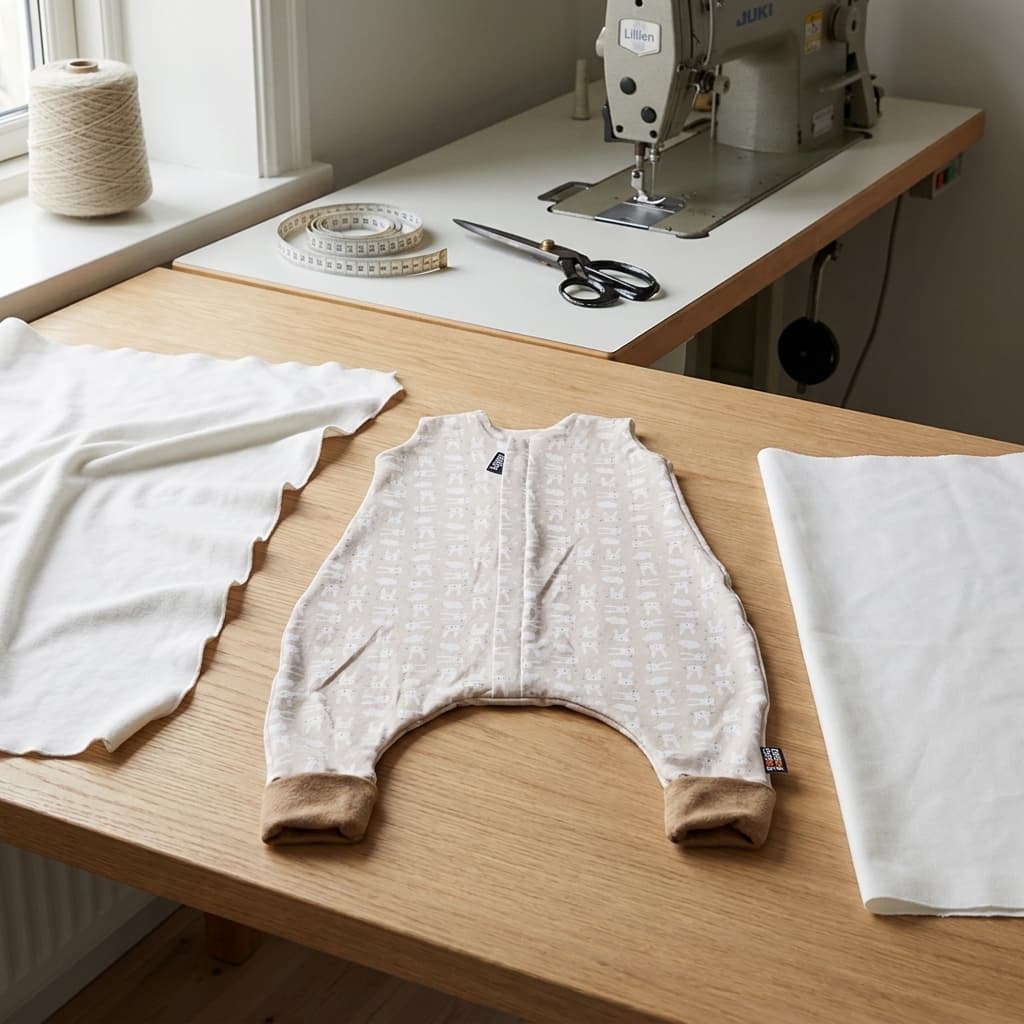
How is cotton fabric made?
Cotton yarn can be processed in several different ways. For everyday baby products, the most important distinction is between knitted and woven fabric.
Cotton knit fabric
Knit fabric is made by forming interconnected loops of yarn. This structure gives the material its natural stretch and allows it to adapt to movement.
Cotton knit fabric can be stretchy even without added elastane. Its exact properties depend on the type of knit, its construction, weight and finishing.
Knit fabrics are commonly used for:
- children’s clothing,
- sleeping bags,
- blankets,
- fitted sheets,
- hats, mittens and other products that need to adapt to the body.
Cotton woven fabric
Woven fabric is made by crossing two sets of yarns. This creates a firmer material that stretches less and retains its shape more effectively.
Woven cotton is commonly used for:
- traditional lace-up swaddles,
- classic flat sheets,
- bed linen,
- shirts,
- products where strength and shape stability are important.
How can you tell knit fabric from woven fabric?
The difference is easy to imagine if you compare a regular cotton T-shirt with a classic cotton shirt.
Both can be made from 100% cotton, yet they behave very differently. A T-shirt is usually made from knit fabric, so it is more flexible and adapts to movement. A shirt is normally made from woven fabric, which holds its shape and barely stretches.
You can also try a simple test with the fabric itself:
- Knit fabric will usually stretch slightly when gently pulled and then return towards its original shape.
- Woven fabric feels firmer and, unless it contains stretch fibres, barely stretches at all.
The cut edges also behave differently. Knit fabric may curl slightly, while woven fabric is more likely to fray.
What are the properties of cotton knit fabric?
We especially appreciate cotton knit fabric for its comfort. It is particularly suitable for products that remain in contact with a child’s body for long periods and need to adapt to movement.
Its typical properties include:
- softness and a pleasant feel against the skin,
- natural stretch,
- the ability to adapt to a child’s movements,
- good breathability,
- the ability to absorb moisture,
- comfort during wear and sleep.
Knit fabric does, however, require proper care. If it is washed at too high a temperature or dried incorrectly, it may shrink more noticeably or lose its original shape.
This is not necessarily a sign of poor quality. It is a natural characteristic of cotton fibres combined with the flexible structure of knitted fabric. It is therefore important to follow the care instructions stated on the label of each product.
What are the properties of cotton woven fabric?
Woven cotton offers different advantages. It is firmer, more stable and particularly useful where the product needs to keep its shape.
Its typical properties include:
- greater strength,
- good shape stability,
- less stretch,
- resistance to mechanical strain,
- slightly greater tolerance if the recommended washing instructions are not followed precisely.
Its lower stretch also means that woven fabric does not adapt to body movement in the same way as knit fabric. It is therefore not possible to say that one is simply better than the other. Each is suitable for a different purpose.
Muslin is also a woven cotton fabric
Muslin is sometimes perceived as a completely separate material, but it is actually a type of woven fabric, most commonly made from cotton.
It differs from classic cotton cloth through its light, looser structure and its characteristic naturally crinkled appearance. It is airy, soft and especially popular for lightweight summer products.
Although muslin and classic cotton cloth can both be woven from cotton yarn, they feel and behave differently in everyday use.
Our experience from production
When someone asks which type of cotton fabric we like best, our answer is simple:
We love knit fabrics.
Not because they are better than woven fabrics in every respect, but because they are flexible, adapt to the body and do not press into or dig into a child’s skin unnecessarily during movement.
For products that remain in direct contact with a child’s body for many hours, we consider comfort to be one of the most important qualities. When a baby wriggles or an older child turns in their sleep, knit fabric moves with them.
Woven fabric also has an essential place in our production. We use its strength wherever we need the product to hold its shape.
A typical example is our traditional lace-up swaddles for the maternity ward. The firmer woven fabric helps the swaddle keep its shape after fastening and provide the necessary support for the baby.
We also offer some cotton baby sheets made from woven fabric. It is a traditional option that many customers are familiar with and continue to prefer. As the individual types are not separated in the English category filter, we recommend checking the material description of the specific product.
Knit fabric adapts to the child. Woven fabric helps the product retain its shape. Neither is better in every situation – each is suited to a different purpose.
Why we make most of our sleeping bags from knit fabric
When choosing material for a baby sleeping bag, every manufacturer has to decide which properties to prioritise.
Woven cotton holds its shape well and will generally tolerate more even if the care instructions are not followed exactly. This is one reason why many manufacturers also use it for sleeping bags.
It is a perfectly understandable choice. We have consciously chosen a different approach.
A child spends many hours in a sleeping bag every night. For us, comfort and freedom of movement are therefore more important than maximum shape stability.
Cotton knit fabric is more flexible and adapts better to a child’s movements. When the child turns, bends their legs or changes position, the material does not restrict them unnecessarily or press into the body in the same way as a firmer, non-stretch fabric may do.
The disadvantage is that knit fabric requires proper care. If it is washed at too high a temperature or dried incorrectly, it may shrink more than woven fabric.
Even so, we believe that for a child’s sleeping bag, everyday comfort is more important than greater resistance to incorrect washing.
How to choose the right cotton material
When choosing a product, do not focus only on the wording “100% cotton”. It is also worth considering how the material has been made and what purpose the finished product is intended to serve.
Cotton knit fabric is suitable where the material needs to adapt to movement and remain soft and comfortable during prolonged contact with the body.
Cotton woven fabric is suitable where strength, stability and the ability to retain the product’s shape are important.
Other factors also play a role, including fabric weight, density, dyeing method, yarn quality and the final finishing of the textile. Two fabrics with the same fibre composition may therefore differ in both quality and practical properties.
Common myths about cotton
All 100% cotton fabrics are the same
They are not. Knit fabric, plain woven cotton, muslin, flannel and cotton sateen may all be made from 100% cotton, but they differ significantly in stretch, strength, weight and feel against the skin.
Cotton is always non-stretch
This is mainly true of classic woven fabrics. Cotton knit fabric can be naturally stretchy even without added elastane.
The heavier the fabric, the better the quality
A higher fabric weight mainly means that the material weighs more per square metre. It does not determine its overall quality on its own. A lighter fabric may be more suitable for a summer product, while another product may require greater strength or warmth.
If cotton shrinks, it must be poor quality
Cotton is a natural fibre and a certain degree of shrinkage is normal. The extent depends on the type of material, its previous treatment and the way it is washed and dried. Knit fabrics tend to be more sensitive to unsuitable care than firm woven fabrics.
Woven fabric is better than knit fabric
Neither is universally better. Woven fabric offers strength and stability, while knit fabric provides flexibility and comfort. The right choice always depends on the intended use.
Frequently asked questions
Is cotton knit fabric always made from 100% cotton?
Not necessarily. Some knit fabrics are made entirely from cotton, while others contain a small amount of elastane or another fibre. The exact composition is always stated for the individual product.
Can 100% cotton knit fabric stretch without elastane?
Yes. The stretch comes from the looped construction of the knit itself. Elastane can increase flexibility further, but it is not essential for a fabric to have some natural stretch.
Why can cotton knit fabric shrink more?
Its flexible structure can contract more when exposed to excessive heat, sudden temperature changes or unsuitable drying. It is therefore important to follow the care instructions shown on the product label.
Is woven cotton suitable for babies?
Yes. Woven cotton is suitable for many baby products. The key is that its properties match the intended use. It is especially useful where strength and shape stability are required.
Is muslin knitted or woven?
Muslin is a woven fabric. It is made differently from classic smooth cotton cloth, which gives it a lighter, airier structure and its characteristic crinkled appearance.
Which material is more suitable for a sleeping bag?
It depends on the priorities of the manufacturer and the parents. Woven fabric retains its shape better and is generally less sensitive to washing mistakes. Knit fabric is more flexible, adapts better to movement and, for that reason, we consider it more comfortable for many hours of sleep.
Kaarsgaren Material Guide
Every material has its own unique properties and is best suited for a particular purpose. That is why we have created a series of articles that explain what our products are made of, what makes each material special and which products it is best suited for.
| Material | Article |
|---|---|
| Terry cotton | ➜ Read more |
| Muslin | ➜ Read more |
| Bamboo viscose | ➜ Read more |
| Tencel™ (Lyocell) | ➜ Read more |
| Merino wool | ➜ Read more |
| Organic cotton | ➜ Read more |
| Polyurethane membrane | ➜ Read more |
Our goal is not to claim that there is one perfect material for every situation. Each material has its own strengths and is suitable for different products and different needs. We believe that understanding their properties will help you choose the right product more easily.


