
Choosing the right material is one of the most common concerns for parents. With waterproof mattress protectors, however, it is not only about whether the protective layer prevents liquid from reaching the mattress. It is just as important how comfortable the product feels during sleep, whether it rustles when you move and which material comes into contact with the skin.
That is why our mattress protectors and waterproof fitted sheets combine a functional polyurethane membrane with a comfortable textile layer – cotton terry, lyocell terry or smooth Tencel™. The membrane protects the mattress, while the upper fabric helps provide comfort during everyday sleep.
Simply explained: what is a polyurethane membrane?
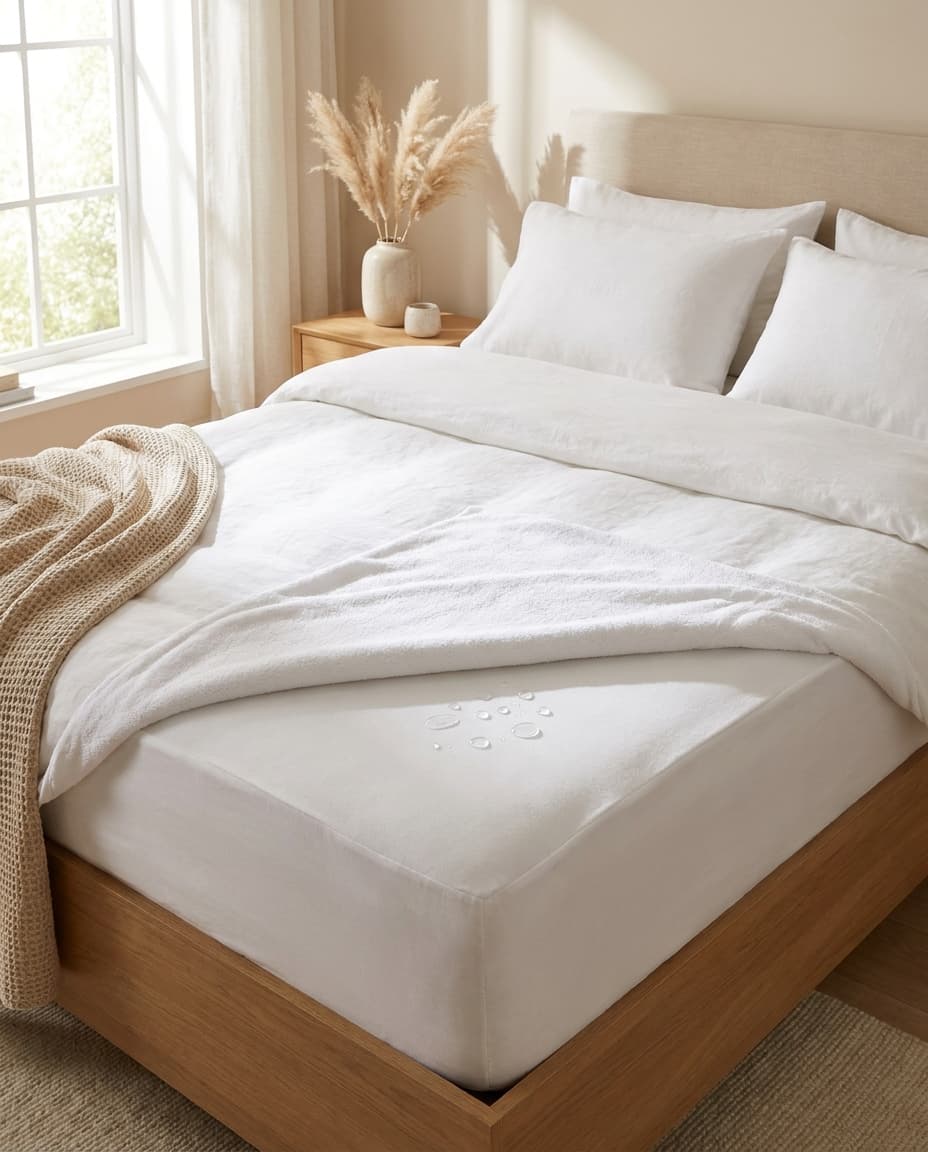
A polyurethane, or PU, membrane is a very thin functional layer bonded to a textile material. Its main purpose is to prevent liquid from soaking through to the mattress.
The membrane itself is not intended to be the surface a person lies directly on. In mattress protectors, it therefore forms the lower protective layer, while a comfortable fabric remains on top.
The resulting material consists of two parts:
- a textile layer, which feels comfortable against the skin and helps absorb moisture,
- a polyurethane membrane, which prevents liquid from reaching the mattress.
PU and PVC are not the same
Two main types of functional materials are used in waterproof mattress protectors – polyurethane and PVC. We do not believe that one must always be better than the other. Each has different properties and may be suitable for a different purpose.
PVC creates a highly reliable barrier and can be a practical option, for example, in hospitals, healthcare facilities or other environments where maximum protection and easy maintenance are the main priorities. In these settings, reliable protection and straightforward care may be more important than long-term sleeping comfort.
For everyday use at home, we chose a polyurethane membrane. In our experience, it is softer, generally does not rustle and does not feel as airtight as PVC when lying on it. As a result, people usually perspire less.
PVC makes sense where maximum protection is the main priority. We chose a PU membrane where we want to combine mattress protection with greater comfort during everyday sleep.
Is a polyurethane membrane breathable?
Yes, a polyurethane membrane is more breathable than PVC. This is one of the reasons why it is often used in products where everyday sleeping comfort matters alongside mattress protection.
However, the level of breathability is not the same for every PU membrane. It depends on the particular type of membrane, its construction and the manufacturing technology used. Some PU membranes are more breathable, while others are less so, which means they cannot all be assessed in exactly the same way.
It is also important to remember that no waterproof membrane will be as breathable as an ordinary textile. Its main purpose is still to prevent liquid from reaching the mattress. Even so, a PU membrane usually feels more comfortable in everyday use than a completely closed waterproof PVC layer because it does not feel as airtight.
Why is the upper fabric also important?
When choosing a mattress protector, people often focus only on waterproof protection. Yet the upper textile layer is just as important for overall comfort.
We combine PU membranes with several different materials:
- cotton terry – a soft, absorbent and well-proven material for everyday use,
- lyocell terry – a soft and highly absorbent cellulose-based material,
- smooth Tencel™ – a pleasant, smooth surface without the characteristic loops of terry fabric.
The upper layer helps absorb moisture and ensures that the person does not lie directly on the functional membrane. The polyurethane layer remains hidden underneath and protects the mattress from becoming wet.
For us, the combination of a comfortable textile and a functional membrane is more important than waterproofing alone. A mattress protector should not only protect the bed, but also allow comfortable sleep.
You can learn more about the materials we combine with PU membranes in the articles Why terry cotton is still the best choice for children’s towels and hooded ponchos and Tencel™ (lyocell) – what is it, how is it made and why is it so popular?.
Our production experience: does a PU membrane rustle?
We have been making and using waterproof mattress protectors for more than twenty years. During that time, we have sold thousands of products and received only three reports that a protector rustled during use.
Because we have used our products ourselves for many years and have not normally noticed any significant rustling, we began looking into what might cause the difference.
We gradually found that the sound does not necessarily come from the protector itself. The surface of the mattress also matters. Some smooth or synthetic mattress covers can create noise when they come into contact with the membrane, even though the same protector does not rustle on another mattress.
The final level of comfort is therefore influenced by a combination of several elements:
- the surface of the mattress,
- the material of the protector,
- the fitted sheet,
- the person’s movement during sleep.
For this reason, the noise level of a protector cannot always be assessed separately from the mattress on which it is used.
Can a PU membrane help limit the penetration of dust mites?
A polyurethane membrane forms a very fine continuous layer that can help limit the penetration of dust mites and other tiny particles into the mattress. This can be useful because mattresses are among the places where dust mites can remain over a long period of time.
However, a mattress protector cannot create a completely dust-mite-free environment. Dust mites also occur naturally in duvets, pillows, bed linen and other household textiles. The purpose of the membrane is therefore not to promise their complete elimination, but to help limit their penetration into the mattress and make it easier to keep the bed clean.
Reducing the presence of dust mites requires a combination of several measures – regular washing of bed linen, ventilation, proper mattress care and the use of an easily washable mattress protector.
Proper care is essential for the membrane’s lifespan
A polyurethane membrane can reliably protect a mattress, but it requires proper care. An unsuitable detergent, excessive heat or various homemade laundry additives can gradually damage the membrane.
When washing products with a PU membrane, we therefore do not recommend using:
- vinegar,
- citric acid,
- baking soda,
- alcohol,
- bleach,
- fabric softener,
- aggressive disinfectants or cleaning products.
These substances may negatively affect the membrane itself or the bond between the membrane and the textile layer. The damage may not be immediately visible. The product can appear intact while gradually losing its waterproof properties.
You can find more information in our article Vinegar, baking soda or citric acid in laundry? Better not.
Is a steam washing programme suitable?
We do not recommend steam washing programmes for products with a polyurethane membrane. Steam and high temperatures can place unnecessary stress on the functional layer and shorten its lifespan.
Breathability during everyday use is not the same as exposure to hot steam during a washing programme. It is therefore always important to follow the care instructions on the label of the particular product.
How to choose the right mattress protector
First, consider how you want to protect the mattress.
A mattress protector with elastic straps at the corners mainly protects the top surface of the mattress. It is easy to put on, easy to remove and suitable for everyday protection.
A waterproof fitted sheet also covers the sides of the mattress. It is suitable when you want the product to stay firmly in place and not move during use.
The surface material also matters. Cotton terry is a classic and highly absorbent option, lyocell terry feels soft, while smooth Tencel™ may suit people who do not like the looped texture of terry fabric.
You can find a more detailed overview of the different types in the article Mattress protection for everyday use – what type to choose and why.
You can view our current selection in the mattress protectors and waterproof fitted sheets category.
Frequently asked questions
Is a polyurethane membrane completely waterproof?
Its purpose is to prevent liquid from reaching the mattress. However, its performance also depends on the condition of the product and proper care. A damaged, cracked or incorrectly washed membrane may gradually lose its waterproof properties.
Why do we use PU instead of PVC?
We chose a PU membrane mainly because of the comfort it provides during everyday sleep. It is soft, generally does not rustle and does not feel as airtight as PVC. PVC, on the other hand, has its place where maximum protection and easier operational maintenance are the main priorities.
Can fabric softener be used?
We do not recommend using fabric softener on products with a functional membrane. It can remain in the fibres and negatively affect the properties of both the textile and the functional layer.
Can a product with a membrane be tumble dried?
This always depends on the particular product and the instructions on its care label. High temperatures may damage the membrane or the bond between the individual layers, so we do not recommend using programmes that are not expressly permitted by the manufacturer.
Can waterproof mattress protectors also be used by adults?
Yes. Waterproof mattress protectors and fitted sheets can also be used on double beds, beds for older people, during long-term care or anywhere you want to protect the mattress from perspiration, liquids and everyday accidents.
Related articles
- Mattress protection for everyday use – what type to choose and why
- Vinegar, baking soda or citric acid in laundry? Better not
Kaarsgaren Material Guide
Every material has its own unique properties and is best suited for a particular purpose. That is why we have created a series of articles that explain what our products are made of, what makes each material special and which products it is best suited for.
| Material | Article |
|---|---|
| Terry cotton | ➜ Read more |
| Muslin | ➜ Read more |
| Bamboo viscose | ➜ Read more |
| Tencel™ (Lyocell) | ➜ Read more |
| Merino wool | ➜ Read more |
| Organic cotton | ➜ Read more |
| Cotton | ➜ Read more |
Our goal is not to claim that there is one perfect material for every situation. Each material has its own strengths and is suitable for different products and different needs. We believe that understanding their properties will help you choose the right product more easily.


